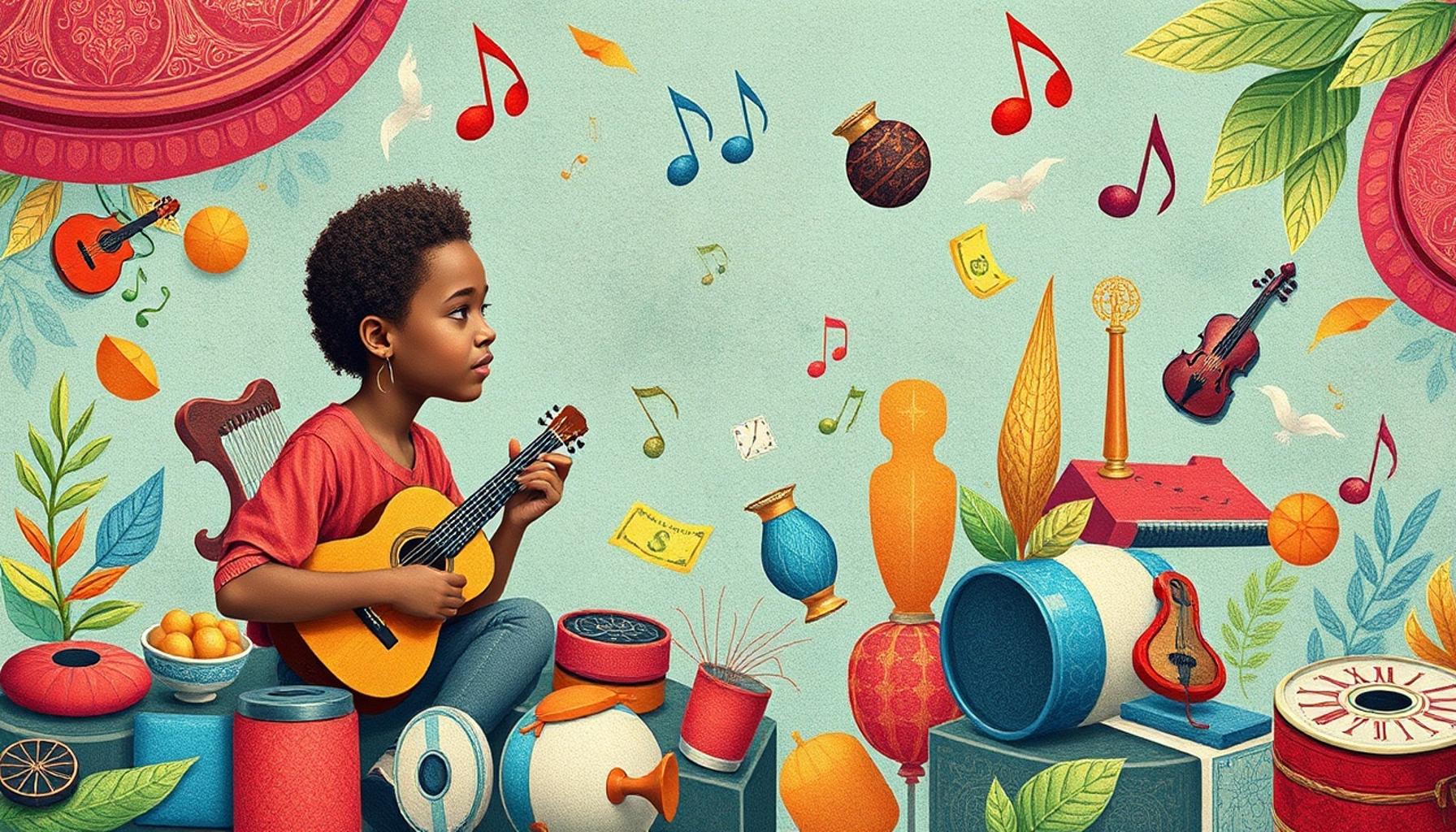
The Influence of Music Education on Creative Thinking and Problem-Solving Skills

The Integral Role of Music in Fostering Creativity
Engagement in music education extends far beyond mastering melodies and harmonies; it serves as a powerful catalyst for cognitive development and creative expression. When students immerse themselves in music, they not only learn to appreciate art but also enhance their cognitive faculties, laying the groundwork for future problem-solving abilities. This interconnection between music education and creative thinking warrants further exploration, especially as educators seek methods to cultivate innovation in students.
Numerous studies affirm that music participation is closely linked to cognitive growth, particularly in young learners. Research from the University of California, Los Angeles underscores that brain regions stimulated by musical training are crucial for memory, reasoning, and attention. This stimulation is not incidental; it fundamentally alters brain structure and function, enhancing both academic and life skills. For instance, students involved in band and choir activities have been shown to develop superior spatial-temporal skills, essential for understanding complex concepts in mathematics and science.
- Improved Brain Function: Engaging with music improves neural connectivity and strengthens pathways associated with complex thinking, thus boosting comprehension across various disciplines.
- Increased Emotional Intelligence: Participation in music helps nurture empathy as students learn to interpret diverse emotional expressions in different compositions, fostering greater social awareness.
- Better Academic Performance: Studies reveal that children with musical training often outperform their peers in standardized tests, particularly in mathematics and reading comprehension, highlighting the cross-disciplinary benefits of music.
Moreover, music education lays the groundwork for essential social skills such as collaboration and communication. In ensemble settings, students quickly learn to listen and adapt to others, refining their ability to tackle challenges from varied perspectives. This collaborative spirit contributes significantly to creative thinking, as students learn to appreciate diverse ideas and approaches. This synergistic environment prepares them for real-world scenarios where teamwork and creativity are paramount.
As educational institutions across the United States re-evaluate their curricula to promote a well-rounded education, the significance of music education is becoming increasingly recognized. Parents and educators must advocate for the integration of music in schools, understanding its profound implications for creative thinking and problem-solving skills.
By delving into the multifaceted benefits of music education, we can appreciate its vital role in shaping the future of our youth, encouraging a generation of creative thinkers and skilled problem solvers. The ongoing conversation around music in education is essential—paving the way for innovative learning experiences that resonate well beyond the classroom.
Unlocking the Cognitive Benefits of Music Education
As music education finds its place in the conversation surrounding innovation in learning, the transformative effects it has on students’ creative thinking and problem-solving skills become increasingly evident. Beyond the ability to play an instrument or sing in tune, music education engages the brain in unique ways, fostering skills essential for both academic achievement and personal development. One of the key insights emerging from recent research is that learning music can markedly enhance critical thinking abilities.
Research conducted at Johns Hopkins University emphasizes how musical training not just promotes artistic skills but also influences analytical abilities. This is largely due to music’s complex structure, which requires students to engage in skills such as pattern recognition and abstraction—factors critical to both mathematics and logical reasoning. Students exposed to consistent musical education demonstrate superior abilities in breaking down problems and developing innovative solutions. The very act of interpreting rhythm, pitch, and dynamics helps create neural connections that bolster logical thought.
- Pattern Recognition: Music education requires students to identify and predict patterns, sharpening their analytical skills. This skill translates effectively to problem-solving across disciplines like mathematics and science.
- Critical Listening: By analyzing music, students learn to detect nuances, improving their ability to evaluate situations critically and make informed decisions.
- Enhanced Memory: Engaging with music strengthens memory retention capabilities, allowing for better recall of information and improving academic performance.
Furthermore, the emotional aspect of music cannot be overlooked. Programs that incorporate music education often facilitate deeper connections between students and their peers. These connections foster an environment where ideas flow freely, encouraging collaborative problem-solving. For instance, when students work together in a band or choir, they not only develop their musical skills but also learn essential teamwork and communication strategies, integral to creative thinking.
The interdisciplinary nature of music also equips students with transferable skills applicable across a spectrum of fields. Music encourages a level of creativity that is crucial in areas like engineering, art, and business. A study from the National Endowment for the Arts highlights that students involved in the arts score higher on standardized tests and are more likely to pursue STEM fields, signifying the profound impact music has on fostering interdisciplinary excellence.
In an era where 21st-century skills are prioritized, integrating music education into curricula is not merely beneficial but necessary. As educators strive to nurture independence and innovative thinking, acknowledging the impact of music education on cognitive development is essential. The insights gained from ongoing research into music’s influence will continue to shape teaching approaches, making a strong case for its essential role in modern education.
The Impact of Music Education on Creative Thinking
Music education is more than just learning to play an instrument or sing; it fosters a unique environment that enhances creative thinking. Studies indicate that students engaged in music programs tend to exhibit higher levels of creativity compared to their peers who do not participate in such activities. This creative boost is attributed to the nature of music itself, which encourages exploration and experimentation. Learning various musical concepts and improvisation not only directs students towards innovative thinking but also enhances their ability to solve problems in a flexible manner. Students learn to navigate complex compositions, which parallel the complexities of real-life challenges, fostering a mindset that seeks new solutions and perspectives.
Developing Problem-Solving Skills Through Music Education
Music education also cultivates essential problem-solving skills. When students face challenges in learning an instrument or understanding musical theory, they engage in a process that involves critical thinking, assessment, and adaptation. This iterative process of trial and error, along with the need to analyze and interpret music, directly correlates with enhanced problem-solving capabilities. For example, when a student struggles to master a difficult piece, they must identify the specific hurdles, strategize their approach, and execute a plan for improvement. This practical application of problem-solving within a musical context translates to improved cognitive flexibility and resilience in academic settings and everyday life.
Interdisciplinary Benefits of Music Education
The influence of music education extends beyond its immediate scope, creating interdisciplinary connections that enrich cognitive development. By intersecting with subjects like mathematics and the sciences, music serves as a medium through which students can see relationships between different forms of knowledge. For instance, understanding rhythm and meter involves fractions, while music theory overlaps with principles found in geometry and spatial reasoning. This interdisciplinary approach not only makes learning more holistic but also reinforces critical thinking, allowing students to approach problems from multiple angles.
| Advantages of Music Education | Description |
|---|---|
| Enhanced Creativity | Music education promotes innovative thinking through exploration and improvisation. |
| Improved Problem-Solving Skills | Engaging with music challenges students to critically assess and adapt their strategies. |
As we can see, music education promotes both creative thinking and problem-solving skills, making it a valuable component of a well-rounded education. The ability to analyze, adapt, and innovate allows students to thrive not only in music but across various disciplines, ensuring they are well-equipped for the challenges of the future.
The Role of Music Education in Enhancing Innovation and Collaboration
As the educational landscape continues to evolve, the role of music education as a catalyst for innovation and collaboration cannot be overlooked. In addition to honing individual talents, music has the innate ability to create an environment where collective creativity thrives. Students participating in music programs not only develop technical skills but also learn how to merge their ideas with those of their peers, a fundamental aspect of effective problem-solving.
The experience of working in ensembles—whether in orchestras, bands, or choirs—instills a sense of responsibility and accountability. These settings require students to align their personal musical contributions with the collective sound, encouraging them to think critically about their role within a larger framework. This process trains them to brainstorm creatively, evaluate proposals, and arrive at consensus-based solutions, skills that are crucial in academic and professional settings alike.
Furthermore, engaging in music education promotes a mindset oriented towards exploration and experimentation. When students improvise or compose music, they are not merely adhering to strict guidelines; they’re encouraged to break free from conventional boundaries and explore new possibilities. This freedom of expression fosters a culture of risk-taking which is vital for innovation. A study conducted by Yale University found that students with robust music backgrounds exhibit greater flexibility in their thinking, allowing them to approach challenges from multiple perspectives.
- Collaboration Skills: Ensemble playing develops vital skills in teamwork, allowing students to appreciate diverse viewpoints and cultivate mutual respect, invaluable for group projects across subjects.
- Creative Confidence: Music education nurtures self-expression and experimentation, empowering students to take creative risks that can lead to unique solutions in various fields.
- Adaptability: The dynamic nature of musical performance teaches students how to adapt to changing circumstances, a skill that is essential in today’s fast-paced, ever-evolving world.
Interestingly, the benefits of music education extend beyond the traditional classroom setting. Data from the Education Commission of the States indicates that schools with robust music programs report not just higher test scores, but also higher graduation rates. This correlation suggests that music education serves as a motivation booster, engaging students who may otherwise feel disconnected from their studies. This energized engagement results in an enhanced attitude towards learning, prompting students to apply their creative thinking and problem-solving skills across various subjects.
Moreover, schools increasingly recognize the importance of integrating music with other academic disciplines. Programs that combine music education with applied sciences, for instance, encourage students to explore concepts such as sound waves and frequency through hands-on experiences. This rich, interdisciplinary approach cements knowledge while simultaneously enhancing innovative thinking. One noteworthy example stems from the Carnegie Hall’s Weill Music Institute, which showcases how cross-curricular events can vividly illustrate the relationships between music, science, and mathematics, thus inspiring a new generation of creative thinkers.
As the demand for creative problem solvers increases in the workplace, music education emerges as more than just an artistic endeavor; it lays a crucial foundation for transformative thinking. By fostering collaboration, innovation, and adaptability, music education prepares students to succeed in a complex and interconnected world.
Conclusion
In summary, the evidence supporting the influence of music education on creative thinking and problem-solving skills is both compelling and multifaceted. As highlighted throughout this article, music education offers students a unique platform to enhance their creativity through hands-on experiences and collaborative engagements. The interplay of technical skills and artistic expression fosters an environment where innovation flourishes, preparing students not only for academic success but also for dynamic careers in an increasingly complex world.
Students who participate in music programs are equipped with essential skills such as adaptability and creative confidence, which are crucial for tackling real-world challenges. By engaging in ensemble performances and improvisation, learners experience firsthand the impact of collaboration and shared leadership. The ability to merge diverse ideas and perspectives promotes critical thinking, making music education a powerful tool for shaping future leaders capable of addressing contemporary problems.
Moreover, the integration of music education with other disciplines represents an innovative approach to learning that deepens understanding and broadens cognitive horizons. As educational institutions continue to adapt to the demands of a rapidly changing landscape, prioritizing music programs can serve as a strategic measure to elevate overall student achievement and engagement.
In essence, as we recognize the profound role that music education plays in developing well-rounded, creative individuals, it becomes imperative to advocate for its inclusion and expansion within our education systems. The future of our students—and, by extension, our society—hinges on cultivating not just competent learners but visionary thinkers who can navigate the complexities of tomorrow’s world.