The Evolution of Street Theater: Art, Activism, and Community
Overview of Street Theater
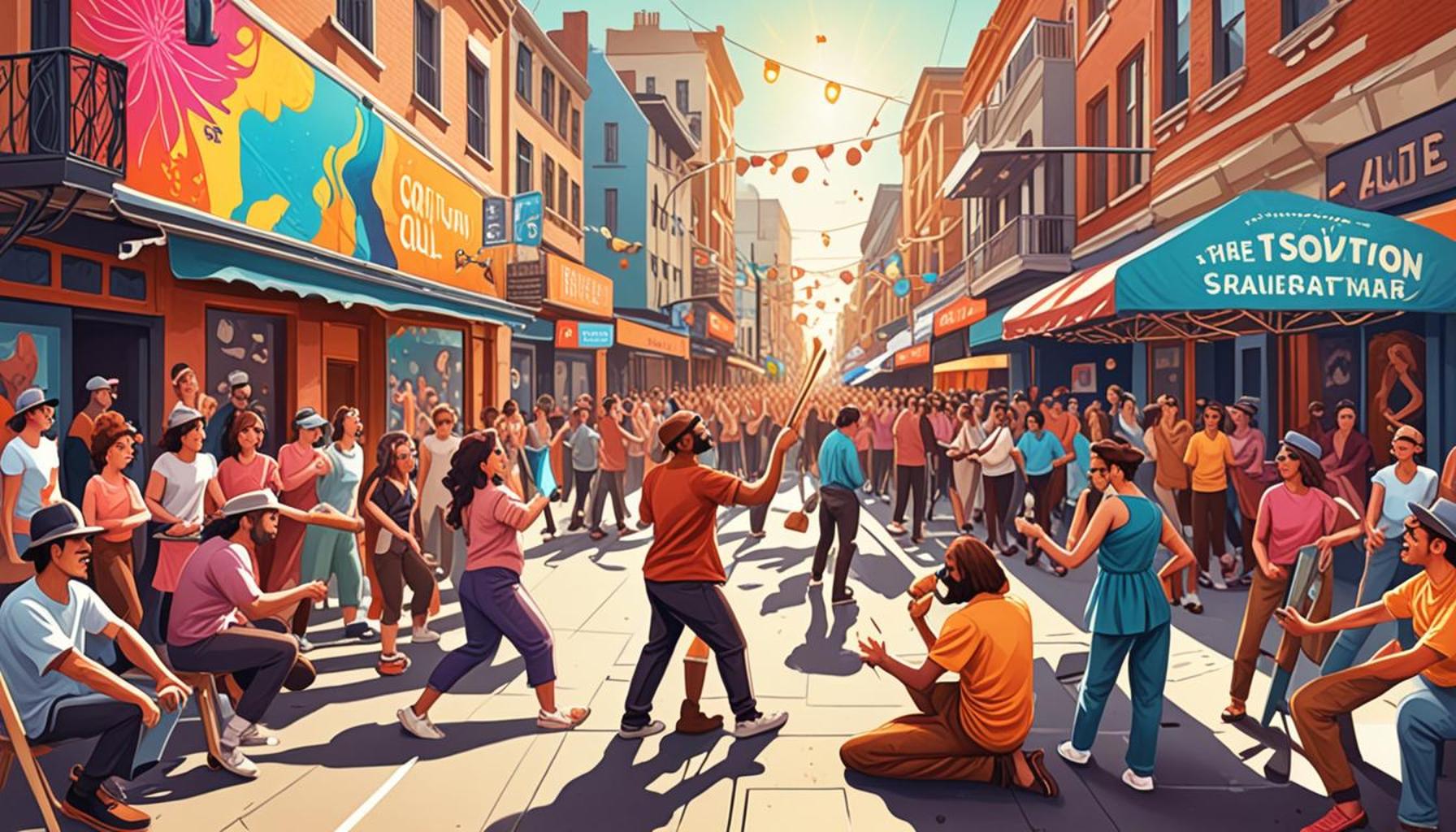
Street theater has evolved into a vibrant, dynamic medium that intersects the realms of art, activism, and community engagement. Originally emerging from grassroots movements, it serves as a multi-functional platform designed to entertain, educate, and inspire. Performance artists utilize public spaces—such as parks, city squares, and crowded sidewalks—to reach diverse audiences, allowing for spontaneous interactions that traditional theater often lacks.
Purpose and Impact
The underlying purposes of street theater can be categorized into several pivotal roles that contribute to its significance within society.
- Entertainment: At its core, street theater captivates audiences through lively performances. This entertainment value can manifest in various forms, from musical numbers to dramatic monologues, often drawing significant crowds. For instance, the annual New York City Fringe Festival features street performers of different genres, captivating urban dwellers with their creativity.
- Awareness: Street theater excels in shedding light on pressing social and political issues. Performers frequently tackle subjects like racial equality, climate change, and economic injustice. For example, in San Francisco, companies like Foothill Theatre Company have engaged audiences by critiquing local gentrification through immersive and provocative performances.
- Community Building: It also plays a crucial role in fostering connections among diverse groups of people. Events like the Los Angeles Street Theater Festival unite various communities, inviting individuals from different backgrounds to collaborate on artistic expressions that resonate with their lived experiences.
Addressing Critical Issues
Street theater goes beyond merely entertaining; it functions as a powerful tool for activism. Artists often embed powerful narratives within their performances, which mobilize community members to engage with significant issues. Many theater groups actively encourage their audiences to participate, creating an inclusive atmosphere where discussions flourish. Initiatives surrounding topics such as gun control and immigration reform are brought to life through raw, emotional skits that provoke thought and catalyze action.
Furthermore, street theater serves as an accessible forum for marginalized voices that might otherwise go unheard. It allows performers to express their views and experiences, often resonating deeply with those in attendance. This accessibility has garnered wider appreciation for the art form, prompting more individuals to delve into social issues they may not have previously encountered.
Conclusion
The evolution of street theater reflects its power as an artistic and transformative medium within American society. As it continues to adapt to current cultural climates, street theater offers a vital method for community engagement, social commentary, and public dialogue. Through these performances, artists not only celebrate creativity but also inspire advocacy and collective action. Engaging with street theater allows audiences to witness the vibrant mosaic of voices within urban spaces, encouraging a deeper understanding of the complexities surrounding contemporary issues. Join us in exploring the ongoing journey of street theater and its impact on the lives of individuals across the United States.

DIVE DEEPER: Click here to learn more about cultural diversity in the performing arts
Historical Context of Street Theater
The roots of street theater can be traced back to ancient civilizations where communal storytelling was not only a source of entertainment but also a means of imparting moral lessons, cultural values, and historical narratives. Through the centuries, these public performances have transitioned and adapted, reflecting the societal changes and challenges of their times. However, it was during the 20th century that street theater emerged as a prominent form of artistic expression and activism, particularly in the United States.
The post-World War II era saw a burgeoning movement of street theater, as various social and political movements gained traction. Among the most influential were the civil rights and anti-war movements, which harnessed the power of performance art to convey urgent messages and engage the public. The use of theater in public spaces allowed these movements to address key issues, making their voices heard loud and clear in a time of division and turmoil.
Influential Movements and Groups
Throughout its evolution, street theater has witnessed the emergence of numerous influential groups that have driven its growth and significance. Some of the essential movements and collectives include:
- The Living Theater: Founded in 1947, this New York-based company merged theater with political activism, emphasizing the need for social change. Their provocative performances challenged audiences to rethink societal norms.
- The Bread and Puppet Theater: Established in the 1960s, this Vermont-based troupe is known for its large-scale puppetry and visual spectacles that articulate themes of justice, human rights, and social accountability. They have encouraged community involvement through their free outdoor performances.
- Cornerstone Theater Company: Since 1986, this Los Angeles-based theater company has prioritized collaboration with different communities, creating performances that reflect local histories and experiences. Their inclusive approach emphasizes the *art of storytelling* to promote understanding and acceptance.
These groups have forged ahead, merging elements of art, activism, and community engagement in unique ways. Their commitment to addressing societal issues through performance has created a rich tapestry of theatrical traditions that challenge and inspire.
The Role of Public Spaces
Public spaces play a vital role in the phenomenon of street theater. Unlike traditional theaters confined to set stages, street theater thrives in open areas where art meets the urban environment. Parks, sidewalks, and plazas become versatile performance venues, offering a platform that is both accessible and inviting. The spontaneous nature of these performances often breaks down barriers, allowing performers and audiences to interact in a manner that fosters shared experiences.
Moreover, the significance of location is evident in how performance can transform everyday sites into stages of activism, drawing attention to local issues. For instance, performances addressing environmental concerns in a polluted park can serve to raise awareness of larger social injustices. The innovative use of space cements the critical bond between street theater and the communities in which it exists.
Throughout history, the evolution of street theater reveals its remarkable capacity to adapt and address pressing societal issues while engaging the community. As we delve deeper into the contemporary landscape of this art form, we can expect to witness further transformations and reinventions that enhance its relevance and impact in today’s rapidly changing world.
| Advantage | Impact |
|---|---|
| Accessibility | Street theater breaks down traditional barriers, making theater arts available to all social strata, enhancing community engagement. |
| Social Awareness | By addressing pertinent social issues, street theater promotes activism, provoking thought and inspiring action among audiences. |
Street theater has evolved into a powerful medium that blends art, activism, and community spirit to challenge societal norms and inspire change. Artists take to the streets, transforming public spaces into vibrant theatrical stages that speak directly to the community. This evolution highlights the importance of cultural expression and the role of performance in social movements.From political protests to grassroots initiatives, street theater has become a platform for marginalized voices. The works produced often reflect local concerns, drawing attention to issues like inequality and environmental degradation. Audiences are not just passive observers but active participants in dialogues that challenge the status quo.Moreover, collaborations between artists and community members build resilience and solidarity within neighborhoods. The carnival atmosphere of street performances fosters a sense of belonging, turning ordinary spaces into areas of creative expression. As the genre continues to evolve, it invites us to rethink our relationship with art and activism in the public sphere.
DISCOVER MORE: Click here to dive deeper
Contemporary Influences and Innovations
As we move further into the 21st century, street theater continues to evolve, incorporating contemporary influences that reflect the dynamic nature of social movements and technological advancements. The rise of digital media has opened new avenues for street theater, allowing urban performers to blend traditional theatrical techniques with modern technologies, including video projections and interactive installations. This fusion creates immersive experiences that not only entertain but also resonate with audiences in fresh, engaging ways.
In recent years, street theater has embraced themes such as climate change, social justice, and racial equality, echoing the sentiments of modern-day activism. For example, the Climate Justice Theater movement has emerged, using street performances to draw public attention to global warming and environmental degradation. Artists are creatively engaging communities in conversations about sustainability and ecological responsibility, providing a platform for local voices often overshadowed in broader discussions.
Additionally, the Black Lives Matter movement has significantly influenced street performance, with artists taking to the streets to express solidarity through their art. Rallies and protests often feature live performances that highlight experiences of systemic racism, police brutality, and the fight for civil rights. These performances serve not only to entertain but also to educate and mobilize the community, creating a sense of unity and urgency that is crucial during times of social upheaval.
The Role of Technology
Technology plays a dual role in contemporary street theater—both as a tool for performance innovation and as a medium for outreach. Social media platforms have become vital for promotion and audience engagement. Artists often share clips of their performances online, which can go viral, amplifying their messages far beyond the physical locations of their shows. For instance, the use of Instagram and TikTok allows performers to reach younger audiences who may not typically seek out traditional theater.
Moreover, some groups are experimenting with augmented reality (AR) and virtual reality (VR) to enhance street performances. This innovative approach to storytelling invites audiences to interact with digital elements that coexist with live performances, offering a more profound engagement with the subjects being explored. This integration of technology contrasts sharply with the fixed nature of traditional theater and reflects the fluid, evolving landscape of artistic expression.
Global Perspectives
The influence of global perspectives cannot be understated in the narrative of street theater’s evolution. International theatrical traditions often infuse local performances with rich cultural insights, adding depth and diversity to the art form. In cities like Chicago and New York, street theater from Latin America, Asia, and Africa has gained ground, creating a cross-cultural dialogue that allows for the exchange of ideas and storytelling techniques. Collectives such as the Teatro de los Andes and Ghana’s Abibigromma are just examples of groups that integrate their cultural narratives into the global street theater movement, showcasing a vibrant variety of artistic expressions.
This exchange not only enriches the performances but also fosters an understanding of diverse societal issues through a global lens, enabling audiences to empathize and connect with stories that may be outside their immediate experiences. Consequently, street theater serves as a melting pot, blending unique cultural perspectives while showcasing shared human experiences. As the movement continues to grow, practitioners remain committed to using art as a vehicle for activism and community engagement, ensuring that performances resonate with the critical issues facing society today.
DISCOVER MORE: Click here to learn how online communities can elevate independent music projects
Conclusion
The journey of street theater—from its origins rooted in cultural expression to its current role as a platform for activism and community dialogue—highlights its adaptability and relevance in today’s society. As we reflect on its evolution, it becomes evident that street theater is not merely an art form; it is a vital instrument for shaping public discourse. Today’s street performances tackle pressing global issues such as climate change, racial equality, and social justice, acting as a bridge that connects marginalized voices to a broader audience.
The impact of technology cannot be overlooked, as digital innovations significantly enhance the reach and immersive quality of performances. Social media acts as a catalyst for engagement, allowing performances to resonate with diverse communities while also promoting vital messages on a global scale. Furthermore, the contribution of international traditions enriches the American street theater landscape, fostering a dialogue that celebrates cultural diversity and shared experiences.
As street theater continues to adapt, it raises important considerations for the future of public art. How might this evolution inspire new generations of artists and activists? What further innovations await in merging technology with live performance? The possibilities are boundless. By engaging with the community and addressing contemporary challenges, street theater remains a powerful reflection of our times, inviting us to explore deeper meanings that transcend the stage. Thus, as both a form of art and activism, street theater plays a crucial role in shaping a more engaged, empathetic, and informed society.